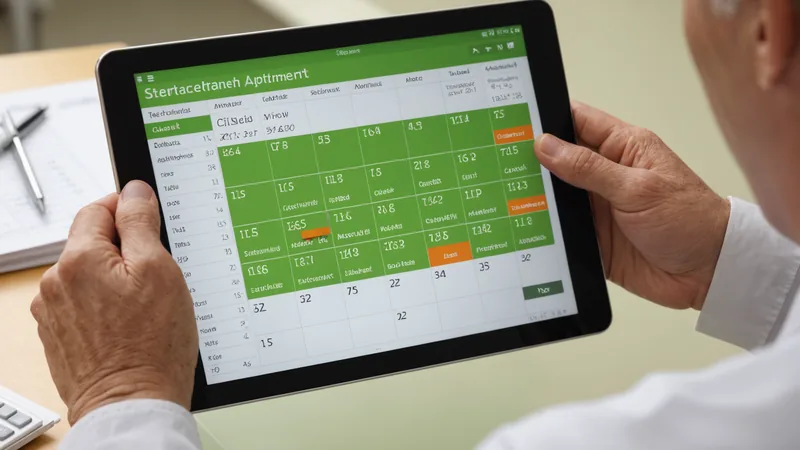
The population health dashboard in your EHR is probably quite good at showing you who is overdue. It can pull every patient in your attributed panel who hasn't had a diabetes eye exam in 14 months, or whose last HbA1c was more than 90 days ago, or whose blood pressure reading is flagged as uncontrolled.
What it cannot tell you — by design, not by oversight — is who in that list is about to become overdue for the first time versus who has been chronically overdue for three years. And it definitely can't tell you which of the currently up-to-date patients are showing early signals of disengagement that will put them in the overdue column next quarter.
That distinction matters enormously for how you allocate care coordinator time. Treating every overdue patient the same way is a resource misallocation problem dressed up as a data problem.
What EHR Panel Management Was Built to Do
EHR panel management tools — whether built into Epic, Athena, or a stand-alone population health module — were designed around a specific workflow: identify patients who have care gaps relative to clinical guidelines, surface them in a worklist, and enable care teams to schedule or contact them to close the gaps.
That workflow is appropriate for preventive care management where the goal is annual touchpoints: flu shots, mammograms, colonoscopies. For those use cases, "overdue" is a binary state. Either the patient had their screening or they didn't. The intervention is the same for everyone — schedule the appointment.
Chronic disease management is a fundamentally different operational problem. A Type 2 diabetic who is six weeks past their HbA1c due date might be: (a) a previously adherent patient who just forgot to reschedule, (b) a patient who has been gradually disengaging for four months and whose upcoming lab will show deteriorating control, or (c) a patient who changed primary care providers and is already scheduled at the new practice. The appropriate response to each scenario is different, and an EHR worklist cannot distinguish between them.
The Temporal Signal Problem
The root issue is that standard panel management tools snapshot the present state of your panel. They answer the question: "What is the care gap status of each patient right now?"
What matters operationally is a temporal question: "What is the trajectory of each patient's engagement, and which direction is it heading?"
Those are different data problems. The snapshot question is solved by a query against your EHR. The trajectory question requires time-series analysis of appointment history, prescription fill intervals, ADT event patterns (admissions/discharges/transfers that may signal acute illness or life disruption), and ideally pharmacy claims data that tells you whether medications are actually being picked up.
Consider a concrete example: a hypertensive patient on amlodipine 10mg and lisinopril 20mg who has been filling both prescriptions every 30 days for 18 months. Their most recent fill was 38 days ago. By a snapshot view, they're two days past the expected fill window — not yet in "overdue" territory in any report. But this is the first time in 18 months that their fill interval has extended beyond 35 days. That deviation from their own personal baseline is a more meaningful signal than any absolute threshold comparison.
EHR panel management tools don't track personal baselines. They track population-level thresholds. Those are useful for different things.
The Worklist Depth Problem
Beyond the temporal signal issue, there's a practical care coordination problem: chronic disease panel management generates large worklists, and care coordinators have limited capacity.
A practice managing a panel of 800 attributed lives with complex chronic conditions — multiple comorbidities per patient, complex medication regimens — might generate a daily or weekly worklist of 60 to 100 patients who have some open care gap by standard criteria. A care coordinator cannot make meaningful contact with 60 patients a day. So they work through the list in order, reach maybe 20 patients before the day ends, and carry forward 40. The patients at the bottom of the list never get called.
The question that worklist tools don't answer: if you can only reach 20 patients today, which 20 are highest-priority? Not highest acuity — priority for outreach, meaning: most likely to disengage further without intervention AND where outreach is likely to be effective given their contact history.
Priority ranking in most EHR panel tools is based on how overdue the patient is: longest gap = highest on the list. That's intuitively reasonable but operationally backward in some cases. The patient who has been unreachable for 18 months and appears at the top of your list every week may not be the highest-value call today. The patient who was perfectly adherent until last month and is now 10 days past their refill window might be much easier to re-engage and prevent a clinical deterioration that will consume far more care resources later.
What's Missing: Predictive Triage vs. Retrospective Reporting
The framing I keep coming back to in conversations with care management leaders: the tools you have are retrospective reporting systems. They are excellent at documenting what has already happened to your patient panel. They are not built to predict what is about to happen and direct your intervention resources there first.
Predictive triage requires a few capabilities that aren't native to EHR panel management:
- Individual patient baselines — understanding what "normal" fill interval or appointment frequency looks like for this specific patient, not the population average
- Anomaly detection against those baselines — flagging deviations from a patient's own pattern rather than (or in addition to) absolute threshold violations
- Multi-signal combination — a patient who has a slightly extended refill interval AND just had an ADT event AND has a recent call in the practice that went unanswered is a different risk profile than any of those signals alone
- Actionability scoring — distinguishing between patients whose predicted disengagement is likely to respond to outreach versus patients who need a different intervention approach (case management escalation, home visit, social work referral)
We're not saying EHR panel management tools are bad — they're appropriate for what they were designed for. The challenge is that most health systems are trying to use them as their complete chronic disease outreach infrastructure, and they weren't built for that purpose. The result is care coordinator time spent working down a list that isn't sorted by actual intervention priority.
The MSSP / ACO Context
For organizations operating under Medicare Shared Savings Program (MSSP) ACO contracts or commercial VBC arrangements, the stakes around panel management effectiveness are direct financial ones. MSSP performance depends on quality measure scores and total cost of care relative to a benchmark. Both are affected by chronic disease management outcomes.
The HEDIS measures that feed into MSSP quality scoring — Comprehensive Diabetes Care (CDC), Controlling High Blood Pressure (CBP), Medication Management — are all directly impacted by how effectively your care team manages between-encounter engagement. A patient whose HbA1c deteriorates between their annual visit and their six-month follow-up is a quality measure failure that shows up in your MSSP scorecard and, depending on your contract structure, in your shared savings calculation.
The financial incentive to catch disengagement early isn't abstract. Early intervention on a patient showing adherence drift is a care gap prevented. A prevented care gap is a HEDIS measure that stays controlled and an acute event that doesn't happen. Both reduce total cost of care against benchmark.
Tools that can only tell you about gaps that have already opened — not gaps that are in the process of forming — are structurally limited in their ability to support this kind of proactive management.
Practical Steps Before Investing in New Infrastructure
Before evaluating purpose-built chronic disease outreach tools, it's worth auditing what you're actually getting from your current panel management workflow. Specifically:
- What percentage of patients on your weekly outreach worklist are there every week without meaningful status change? A high chronic-worklist percentage suggests your current outreach isn't converting — which might be a volume problem (too many to work through) or a prioritization problem (calling the wrong patients first) or a channel problem (calling patients who would respond better to SMS).
- What is your call-to-conversion rate on care gap closure outreach? How many dials does it take to close one care gap? If that number is above 5–6 dials per closure, your triage is likely not well-calibrated.
- Do you have visibility into pharmacy fill data, or are you working entirely from EHR medication lists? This is the data source most care teams are missing, and it's the signal most predictive of imminent disengagement for medication-dependent conditions like hypertension, diabetes, and CHF.
Patientrig connects to both ADT feeds and pharmacy data to build the longitudinal engagement picture that EHR panel reports can't provide — but the practical question of which patients to call today is one every care team is grappling with regardless of what tools they're using. Getting the prioritization logic right is the difference between a care coordination program that prevents deterioration and one that documents it.