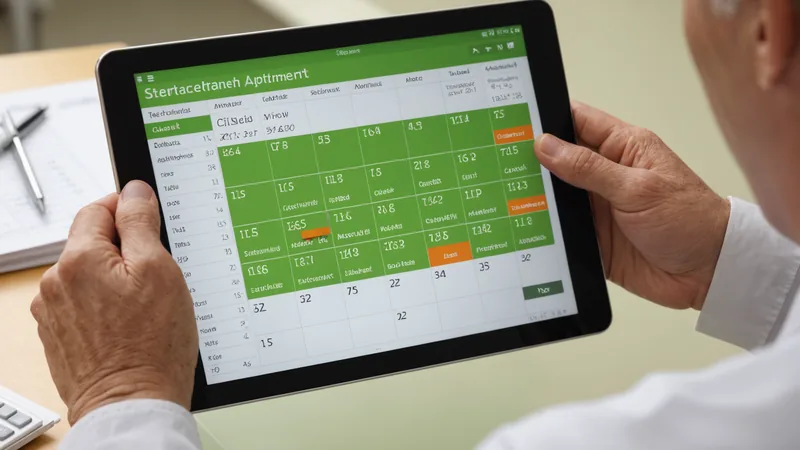
There's a pattern every care coordinator recognizes: a CHF patient gets discharged with a clear follow-up plan, a medication list, and a scheduled appointment for day 14. By day 10, the appointment is a no-show. By day 21, the care team has lost the thread entirely. By day 29, the patient is back in the ED with a chief complaint of dyspnea and fluid overload — and nobody in the health system knew there was a problem until the ADT notification fired.
We built Patientrig specifically because we kept seeing this pattern in the data, and the standard explanation — "patients don't follow up" — doesn't hold up. When you dig into what actually happened between discharge and readmission, the disappearance is rarely a patient choice. It's a cascade of system friction that care teams didn't have the tools to see in real time.
The 90-Day Vulnerability Window
The 90-day post-discharge period is when chronic patients are most likely to go silent. This is partly structural: discharge planning is intense and highly coordinated, but that coordination doesn't persist. The patient goes home to a set of barriers — transportation, work schedules, caregiver availability, insurance coverage confusion, medication costs — that were not visible during the inpatient stay. The care team has a PCP follow-up scheduled and considers the handoff complete.
What the care team doesn't have is visibility into what happens next. Did the patient pick up their lisinopril at the pharmacy? Did the transportation benefit that was confirmed at discharge actually get activated? Did the patient call to reschedule after missing that first appointment, or did they just stop engaging?
For patients managing Type 2 diabetes, hypertension, or COPD alongside CHF, the risk compounds. Missing a single metformin refill isn't just a medication adherence problem — it's a signal that the patient's engagement with the care system is fraying, and other touchpoints are likely fraying too.
Why Patients Actually Disengage
When Camille, our Head of Clinical Success, talks to care coordinators about post-discharge disengagement, they consistently describe the same factors. The patient who misses the day-14 follow-up usually has a reason: the appointment was during a work shift, they had no one to drive them, or they felt "okay" and didn't see the urgency. The care team, with a panel of 400+ attributed lives, sends a reminder call that goes to voicemail, marks the outreach attempted, and moves on. Nobody finds out the patient also didn't pick up their furosemide refill until the pharmacy claim fails to appear in the next PBM claims feed.
The structural problem is that outreach and monitoring are decoupled. A care coordinator reaches out based on a scheduled calendar — post-discharge call at day 3, day 7, day 14. But the signals that predict which patients are actually at risk for going silent aren't on a calendar. They're in ADT events, Rx fill timestamps, and appointment rescheduling patterns. By the time a care gap appears on a HEDIS report or a population health dashboard, the clinical window for intervention has usually closed.
The Social Determinants Component That Gets Overlooked
SDOH screening tools capture food insecurity, housing instability, and transportation barriers at a point in time — typically at annual wellness visits or during an inpatient stay. But the SDOH factors that drive post-discharge disengagement are often situational and temporary: a caregiver went back to work, a car broke down, a utility bill ate into medication budget this month. These don't show up in the Z-codes in the chart. They show up in behavioral patterns — the patient who normally refills metformin like clockwork suddenly has a 10-day gap, or the patient who always confirmed appointment reminders via SMS didn't respond to the last two.
This is not a failure of the SDOH screening model; it's a limitation of point-in-time screening for a dynamic process. The patients who matter most for post-discharge follow-up are the ones whose engagement behavior changes, not the ones who were already identified as high-risk at admission.
What the Disappearance Looks Like in the Data
Consider a Type 2 diabetic patient — let's call her a 58-year-old woman managing diabetes and stage 3 CKD, discharged from a community hospital in early 2024 following a hyperglycemic episode. Her discharge summary notes HbA1c of 9.4%, a medication reconciliation with metformin and a new GLP-1 agonist, and a follow-up scheduled at her PCP in 10 days.
In the ADT feed: discharge event at day 0. No subsequent ED or inpatient events. In PBM claims: metformin refill at day 4. GLP-1 agonist not filled — the specialty pharmacy authorization took 12 days, and by then the patient was confused about whether her doctor still wanted her on it. PCP appointment: no-show at day 10, rescheduled by the office to day 28. No outreach was generated between day 10 and day 28 because the rescheduling appeared to be "handled."
At day 28, the patient comes in. HbA1c is now 10.1%. She hasn't been taking the GLP-1 because she thought it wasn't covered. She's been managing on metformin alone for three weeks. She's not "lost to follow-up" in the traditional sense — she's been engaging, just not effectively, and the gap wasn't visible to anyone until she walked through the door.
This scenario isn't unusual. The care gap isn't dramatic. Nobody missed an alarm. The clinical handoff was technically complete. But the outcome — a patient with deteriorating glycemic control and a missed intervention window — is exactly the kind of slow-motion failure that population health programs exist to prevent.
The Role of Proactive vs. Reactive Outreach
Most care management programs run on a reactive model: patients appear on a worklist when a gap has already opened. The HbA1c hasn't been checked in 11 months. The BP reading hasn't been recorded in 90 days. The medication possession ratio has dropped below 80%. By that point, the care coordinator is doing recovery work, not prevention.
Proactive outreach changes the timing calculus. If you can identify — before the PCP follow-up appointment is missed — that this patient has a pattern of dropping out after the first missed refill, you can trigger an intervention at the pharmacy stage rather than the readmission stage. That's a different conversation: a quick check-in call, a message through the patient portal, a pharmacy alert to the dispensing pharmacist. None of these require significant care coordinator time. They require timely signal.
We're not saying that proactive outreach eliminates readmissions. Chronic disease populations are complex, and some patients will disengage regardless of how many touchpoints a care team initiates. What proactive outreach does is compress the time between disengagement signal and care team awareness — from weeks to days, or days to hours in high-acuity cases.
What Care Teams Can Actually Do
The practical implication for care coordinators isn't "work harder" or "call more patients." It's "call the right patients at the right moment." That requires two things: better signal selection (which data points actually predict who's about to disengage), and a workflow that surfaces those signals before a coordinator's daily case review would naturally surface them.
A few things that consistently matter in our experience working with early-stage health system implementations:
- Pharmacy fill gaps are the earliest leading indicator. A missed refill on a chronic maintenance medication — lisinopril, metformin, atorvastatin — precedes a missed appointment more often than it follows one. PBM claims data has a lag, but most health systems have access to real-time or near-real-time pharmacy data through PBM feeds or integrated dispensing data.
- Appointment rescheduling is different from appointment cancellation. Patients who reschedule often re-engage; patients who cancel without rescheduling and don't respond to outreach within 48-72 hours are in a different risk category. This distinction is rarely made automatically in most scheduling systems.
- ADT events are chronically underused for post-discharge monitoring. Most health systems use ADT for care transitions; fewer use it as a continuous signal for engagement monitoring — e.g., looking for patterns like repeated ED utilization without PCP follow-up as a marker of primary care disengagement.
Closing the Gap Before It Opens
The 90-day post-discharge window won't shorten just because care teams want it to. The barriers that cause chronic patients to disengage are real — logistical, financial, behavioral — and they won't be solved by more reminder calls alone. But the gap between when a patient starts disengaging and when a care team notices is a data and workflow problem, and that's a solvable one.
Health systems that are closing care gaps effectively in 2025 are doing it by treating post-discharge engagement as a continuous monitoring problem, not a scheduled check-in problem. The patients who disappear after discharge are usually giving signals — in their pharmacy records, their appointment history, their portal activity — well before they stop showing up. The question is whether anyone is watching for those signals at the right time.